
In the fast-changing world of digital marketing, one thing has stayed constant: if your business isn’t visible on search engines, you’re missing out on massive opportunities. Whether you run a small startup, an e-commerce store, or a personal brand, Search Engine Optimization (SEO) is the fuel that powers long-term digital success.
At Team Coconut, we like to think of SEO as the roots of a coconut tree – invisible to most, but absolutely vital for growth, strength, and survival. Let’s dive deep into what SEO really means for your brand, why it’s more important than ever in 2025, and how you can start implementing it today.
What is SEO?
SEO (Search Engine Optimization) is the practice of optimizing your website to rank higher on search engines like Google, Bing, or YouTube. In simple terms, it’s making your website visible to people who are actively searching for your products, services, or content.
Think about this: When was the last time you scrolled past the first page of Google search results? Probably never. Research indicates that 75% of users rarely scroll beyond the first page. This means if your business isn’t there, you’re practically invisible to most potential customers.
SEO ensures that when your ideal customer types a query like “best travel agency in India” or “eco-friendly clothing for Gen Z”, your website appears at the top – right where the action happens.
Why Does SEO Matter in 2025?
Digital marketing is evolving, but SEO has only become more powerful. Here’s why:
1. People Trust Google Results
When your brand appears at the top of search results, it instantly signals credibility. Customers feel like Google has approved you, making them more likely to click and buy.
2. Cost-Effective Growth
Paid ads are great, but the moment you stop paying, the traffic disappears. SEO, on the other hand, creates long-term results – bringing in organic traffic day and night, without you spending on every click.
3. Voice Search & AI Assistants
With Alexa, Siri, and Google Assistant becoming more common, voice search is booming. People now search using natural questions like “Which café is open near me right now?” SEO ensures your brand shows up for these real, conversational queries.
4. Mobile-First Era
Over 60% of searches come from mobile devices. Google prioritizes mobile-friendly websites. If your site isn’t optimized, you’ll miss out on the majority of your audience.
5. Competitive Advantage
Your competitors are already working on SEO. If you’re not, you’re giving them your customers for free.
Core Elements of SEO
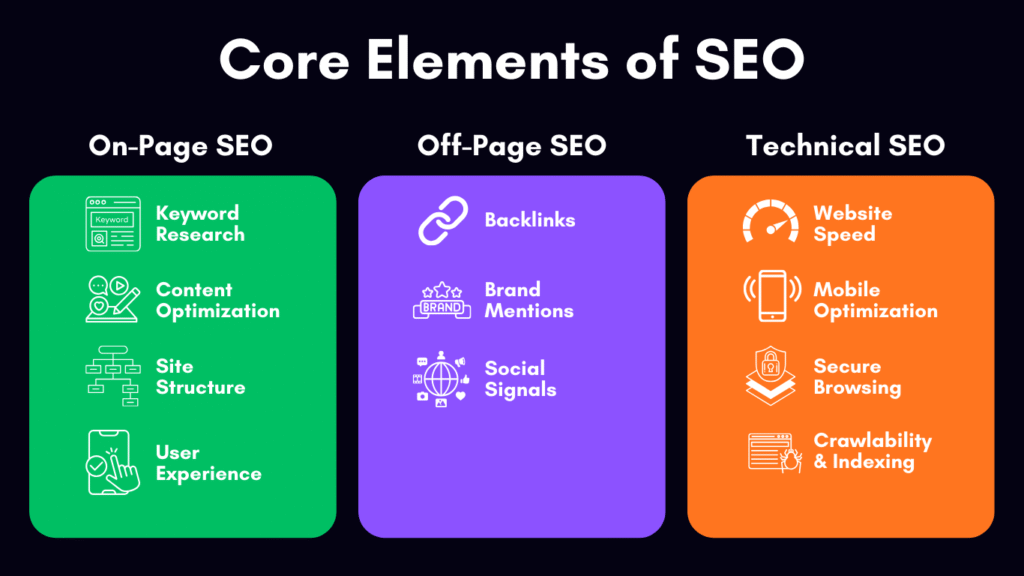
To truly understand SEO, let’s break it into three main pillars:
On-Page SEO
This is everything you do on your website to improve rankings.
- Keyword Research: Identify what your audience searches for. For instance, if you run a travel agency, keywords like “affordable holiday packages India” or “luxury beach resorts Goa” will drive the right traffic.
- Content Optimization: Create blogs, landing pages, and product descriptions around your target keywords. High-quality content answers users’ questions, solves problems, and builds trust.
- Site Structure: A well-organized layout with headings, internal linking, and optimized images makes it easier for both users and search engines to navigate your site.
- User Experience (UX): Reduce bounce rates by ensuring your website loads quickly, is mobile-friendly, and offers a smooth browsing experience.
Off-Page SEO
This is all about building authority outside your website.
- Backlinks: When other credible websites link to your content, it’s like a vote of confidence in your brand. Quality matters more than quantity.
- Brand Mentions: Mentions on blogs, forums, or social media help Google understand your brand’s presence.
- Social Signals: Engagement on your content indirectly affects credibility and search visibility.
Technical SEO
This focuses on how search engines “read” your website.
- Website Speed: Slow websites lose rankings and customers. Aim for under 3 seconds load time.
- Mobile Optimization: Your website must look great and work well on any device.
- Secure Browsing: HTTPS is essential for trust and SEO.
- Crawlability & Indexing: Make sure Google can access all important pages through sitemaps and proper URL structure.
SEO Trends in 2025
SEO isn’t static. Here’s what businesses should focus on this year:
1. AI-Driven Search
Google’s AI-powered Search Generative Experience (SGE) is changing how search results appear. Results are now more conversational and personalized, making long-tail keywords and natural language optimization essential.
2. E-E-A-T (Experience, Expertise, Authoritativeness, Trustworthiness)
Google rewards brands that show real expertise and credibility. Adding author bios, reviews, and unique insights improves trust and ranking potential.
3. Video SEO
YouTube is the second-largest search engine. Optimizing your videos with titles, tags, descriptions, and transcripts helps them rank and drives traffic to your site.
4. Local SEO
“Near me” searches are booming. Small businesses should claim their Google Business Profile, include local keywords, and get customer reviews to dominate local search results.
5. Core Web Vitals
Google now measures page speed, interactivity, and visual stability. Sites with better UX metrics rank higher.
In addition to the strategies we’ve covered here, stay updated on the latest digital marketing trends for 2025 to stay competitive.
Team Coconut’s SEO Strategy
At Team Coconut, we believe SEO isn’t just about algorithms – it’s about people. Our approach blends creativity, storytelling, and technical expertise. Here’s how we make brands stand out:
- Use tools like Google Keyword Planner, Uber Suggest, or SEMrush to find top industry keywords.
- Start a blog and publish content consistently. Google favors fresh content.
- Ensure your website loads under 3 seconds. Optimize images, use caching, and choose a reliable hosting provider.
- Add alt text to images so Google understands your content.
- Claim and optimize your Google My Business listing for local visibility.
- Encourage customers to leave reviews; they boost trust and rankings.
- Track your analytics with Google Search Console and Google Analytics to see what works.
- Use internal linking to guide visitors through your content and boost SEO authority.
We treat every brand as unique. Just like no two coconuts are the same, no two SEO strategies should be identical.
Actionable SEO Tips for Businesses
If you’re just starting with SEO, here are practical steps you can take today:
- Use tools like Google Keyword Planner or Uber Suggest finding the top keywords for your industry.
- Start a blog and publish content regularly.
- Ensure your website loads in under 3 seconds.
- Add alt text to your images so Google understands them.
- Claim and optimize your Google My Business listing.
- Encourage customers to leave reviews – they boost both trust and rankings.
- Keep track of your analytics with Google Search Console and Google Analytics.
Common SEO Mistakes to Avoid
Even experienced marketers make mistakes that can hurt SEO. Avoid these pitfalls:
- Ignoring Mobile Optimization: Most users search on mobile. If your site isn’t mobile-friendly, rankings will drop.
- Keyword Stuffing: Overloading pages with keywords hurts readability and SEO. Focus on natural language.
- Duplicate Content: Copying content from other sites can lead to penalties. Always produce original content.
- Ignoring Site Speed: Slow websites frustrate users and lower rankings.
- Neglecting Analytics: Not tracking performance means you won’t know what’s working or failing.
- Poor Link Strategy: Low-quality or spammy backlinks can damage credibility.
By avoiding these mistakes, you’ll save time, effort, and potential ranking penalties.
Best SEO Tools for 2025
To succeed in SEO, it’s not just about knowing what to do – it’s about using the right tools to make your efforts effective. Here’s a breakdown of the key SEO tasks every brand should focus on, along with recommended tools and examples of how to use them.
| Task | Recommended Tools | Use Case Example |
|---|---|---|
| Keyword Research | Ahrefs, SEMrush, Moz, Ubersuggest | Find high-volume keywords, discover long-tail opportunities, and analyze search intent |
| Technical SEO Audits | Screaming Frog, Sitebulb, Google Search Console | Identify broken links, crawl errors, redirects, and optimize site structure |
| Rank & Traffic Tracking | Google Search Console, SEMrush, Ahrefs | Monitor keyword rankings, organic traffic, and performance trends |
| Image & Visual Content Creation | Canva, Lumen5, Adobe Express | Create SEO-friendly images, infographics, and videos for blogs and social media |
| Backlink Analysis & Building | Ahrefs, SEMrush, Moz Link Explorer | Track backlinks, analyze competitor link profiles, and find link-building opportunities |
| AI Content Support | Jasper, Surfer SEO, MarketMuse, Copy.ai | Plan, write, and optimize content for search engines and audience engagement |
Looking Ahead: SEO from 2025 to 2026
SEO is a constantly evolving field. What works in 2025 will set the stage for 2026. Here’s what brands need to watch:
- Focus on Expertise: Google will continue rewarding brands that provide trustworthy, valuable information. Author credibility and unique insights will matter more than ever.
- AI Search & Conversational Queries: Voice search and AI assistants are making queries more natural and question-based. Content will need to match this style.
- Multimedia Content: Videos, podcasts, infographics, and interactive content will play a bigger role. Search engines are learning to interpret multimedia effectively.
To learn more about how SEO will evolve in 2026, check out our next blog post: Mastering Content Creation for SEO in 2026: What You Need to Know
Conclusion
SEO in 2025 is no longer optional – it’s the foundation of digital success. Whether you’re a small local shop or a growing global brand, showing up on Google can make or break your business.
At Team Coconut, we believe SEO is more than keywords and rankings. It’s about creating real connections, building trust, and turning clicks into loyal customers.
So, are you ready to plant your digital coconut tree? Because the best time to start SEO was yesterday. The next best time is today.
Pingback: Digital Marketing Guide 2025 | Grow Your Business Online